
Spiralling prices pinched the pocket of consumer as edible oil, fuel and many other commodities turned dearer this year amid pandemic-induced disruptions but the inflationary pressure is anticipated to ease, though marginally, in the coming months. As consumers, at retail as well as wholesale levels, are willy-nilly learning to live with the new normal of curbs to contain the spread of coronavirus infections, experts are of the view that elevated inflation is likely to stay longer. After dealing with the devastating blows from the second COVID wave, especially during the April-June period, the economy is well on the revival path but the emergence of Omicron might unsettle the recovery trajectory in the short term.

Almost 80 per cent of all income losses during the first wave of the pandemic in 2020 were incurred by the private sector in India, while in many other countries the entire loss was on respective governments, a report said on Wednesday. While the Centre had announced a Rs 21 lakh crore COVID-19 relief package, comprising 10 per cent of the GDP, the actual financial support was only about 2 per cent of GDP, as the rest was all credit-driven. "Almost four-fifths of all income losses during the pandemic in 2020 were incurred by the private sector in the country, while the government sector bore only about a fifth of the losses.
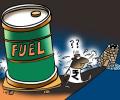
A rise in petrol and diesel consumption can help the government cut cesses on the fuels by Rs 4.5 a litre without impacting revenue collections of FY21, and help cool off the pressure on inflation, domestic rating agency ICRA said on Friday. Petrol consumption is estimated to increase 14 per cent in 2021-22 and diesel by 10 per cent on the lower base, rise in mobility and economic recovery, ICRA said. The rating agency added that it will result in an additional Rs 40,000 crore in revenue for the government through higher collections of the cess.
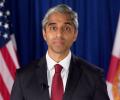
Dr Murthy, 43, a former United States Surgeon General, along with two other co-chairs -- Dr David Kessler and Dr Marcella Nunez-Smith -- would lead a team of leading public health experts who will advise Biden and Vice President-elect Kamala Harris on the deadly virus.
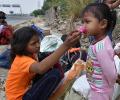
There was no announcement from the government on guaranteeing a minimum basic income, which is the need of the hour. The announcements on portability of ration cards and affordable rental housing to workers are for the long and medium terms. Migrant workers need immediate relief.

The government has also hiked excise duty by 11 percent, which is in addition to the 6 per cent that was announced in the budget, he said.

Investors became richer by over Rs 6.34 lakh crore on Monday as markets gave a big shout-out to the Budget 2021-22, which analysts termed as 'unprecedented' against the backdrop of the pandemic-induced slowdown. Cheering the Budget proposals, the BSE benchmark Sensex zoomed 2,314.84 points or 5 per cent to close at 48,600.61. During the day, it jumped 2,478.63 points to 48,764.40. This was the best Budget-day gain for the markets since 1997, analysts said. Following the extremely positive market sentiment, the market capitalisation of BSE-listed companies rallied Rs 6,34,069.67 crore to Rs 1,92,46,713.70 crore.
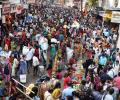
This is reflected in an improvement in their sentiments as well, explains Mahesh Vyas.

As far as Hindus are concerned, the eclipse of Wokeism cannot come any sooner, says Rajeev Srinivasan.

Facing the twin task of fighting the coronavirus pandemic today and building a better tomorrow, the world is experiencing a new Bretton Woods moment, IMF managing director Kristalina Georgieva said

They say that a stimulus package may not be necessary because, unlike last year's total lockdown, public transport, including the railways and airlines, is running and the restrictions on movement are localised and, in some cases, are partial rather than total.

While most economies contracted in the second quarter of 2020, the Chinese economy grew by 3.2 per cent.

Four-nation grouping Quad on Tuesday launched a major new initiative for the Indo-Pacific that allows the partner countries to fully monitor the waters on their shores and help ensure peace and stability in the region, a move that comes amid China's increasingly intimidatory behaviour.

Long-term capital gains tax may be scrapped and the burden of dividend distribution tax could perhaps be shifted from companies to shareholders. Also, the Budget could provide income tax relief for the salaried classes, while proposing tax sops for small, medium and micro enterprises.
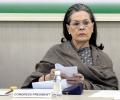
On the hike in fuel prices, she accused the government of profiteering and said it is turning a disaster into an opportunity to fill its coffers. She also alleged that the government is breaking the back of the poor, the farmers, and the middle class due to its 'insensitivity'.

RSS-aligned Bharatiya Mazdoor Sangh (BMS) on Monday expressed disappointment over the government's budget proposals with regard to divestment and foreign direct investment, especially in the insurance sector. The BMS, however, lauded the government for its current efforts on the massive vaccination programme, a special scheme for tea workers in West Bengal and Assam, labour oriented push on infrastructure projects in construction sector and development of five major fishing harbours viz. Kochi, Chennai, Visakhapatnam, Paradip, and Petuaghat as hubs for economic activities etc. On other Budget proposals, it said in a statement that "mixing the beautiful concept of Aatmanirbhar Bharat with FDI and disinvestment in the Union Budget is disappointing for the employees".

She also called upon the partymen to continue to put pressure on the union government to ensure that the daily rate of vaccination trebles so that 75% of the population gets fully vaccinated by end of this year.

Replying to the notice issued, the Central government said that ex-gratia amount cannot be paid due to financial constraints and other factors.

What happens if China depreciates its currency. In that case, Chinese products will be cheaper and people will continue to buy their products: Abhijit Banerjee.

The committee lauded Modi's initiatives to make the government cleaner through anti-corruption measures and demonetisation, it said.

The opposition party also claimed that the Modi 2.0 dispensation has turned out to be an "economic and political disaster" and "constant rollbacks" of economic decisions will lead to worsening of the economic situation.

The party released its manifesto -- Samajwadi Vachan Patra -- for the coming assembly elections, shortly after the BJP released its own.
Buoyed by an increase in public investment and incentives to boost manufacturing, India's economy is expected to grow by 8.3 per cent in the fiscal year 2021-22, less than the previous projection early this year before the country was hit by the second wave of the COVID-19 pandemic, the World Bank has said in its latest report. World Bank chief economist for the South Asia Region Hans Timmer told PTI here that when one looks at the high frequency data, they see that as a result of the second wave of the COVID-19 pandemic, the recovery paused, and some indicate that the recovery actually declined briefly. "We project for this fiscal year 8.3 per cent (growth rate for Indian economy) that is less than we projected early in the year before the health crisis caused by the second wave. "Given the sharp contraction of the economy last year, it might not look like a lot, but in my view, that is actually very positive news, given the violent second wave and the severity of the health crisis," he said on Thursday.

Attorney General K K Venugopal told a bench headed by Justice Bobde that the Constitution (103 amendment) Act, 2019 granting 10 per cent reservation to EWS is intended to uplift around 200 million people who are still below the poverty line.

'The only thing that is safe right now are government securities.'

'Sullivan and Jaishankar welcomed the cooperation in recent weeks that resulted in deliveries of over USD 500 million in COVID-19 relief supplies from the US federal and state governments, US companies and private citizens across America for the people of India'
Moody's Investors Service on Friday slashed its estimate of India's GDP growth during the 2020 calendar year to 2.5 per cent from an earlier estimate of 5.3 per cent, on account of the rising economic cost of the coronavirus pandemic.

The finance minister could well be on her way to setting a record of achieving the biggest single-year reduction in the government's fiscal deficit, explains A K Bhattacharya.
'The India-Pakistan relationship is in a deep freeze, though it could be a lot worse had there not been a new LoC ceasefire a year ago.' 'The India-Pakistan relationship will only start to thaw if the Pakistani military decides it's prepared to push for detente.'

Nearly 25 million jobs could be lost worldwide due to the coronavirus pandemic, but an internationally coordinated policy response can help lower the impact on global unemployment, according to a UN agency. In its preliminary assessment report titled 'COVID-19 and world of work: Impacts and responses', the International Labour Organization (ILO) calls for urgent, large-scale and coordinated measures across three pillars -- protecting workers in the workplace, stimulating the economy and employment, and supporting jobs and incomes.

This will cost the government Rs 3.1 trillion, about 10 per cent of its annual expenditure, and higher than any other spending item in its Budget.

'Modi has not lacked courage in the political sphere. It is time he showed it in the economic sphere as well.' 'To do this, he needs to shed the simple-minded nostrums about economic growth and swadeshi that he learnt in the Sangh Parivar,' suggests Virendra Kapoor.

Some of the policy measures announced are expected to go a long way in removing current challenges on financing faced by businesses and also increasing economic activity, especially in areas of construction and manufacturing.

Urging India Inc to participate in the growth story, Sitharaman said they should participate in the divestment programme by becoming the first bidders.
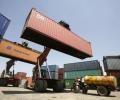
UN economists announced a likely USD 50 billion drop in the worldwide manufacturing exports in February alone as the extent of the damage to the global economy caused by the novel coronavirus (COVID-19) moved further into focus. Citing the China Manufacturing Purchasing Manager's Index (PMI), Pamela Coke-Hamilton, who heads UNCTAD's Division on International Trade and Commodities, said that it had fallen to 37.5 -- a drop of about 20 points -- the lowest reading since 2004. "This also correlates directly to exports and also implies a two per cent drop in overall exports," she said, with a resulting "ripple effect" worldwide "to the tune of a USD 50 billion fall in exports."

"We have got justice and that makes us feel better," Nirbhaya's father said, remembering his daughter on the ninth anniversary of the incident.
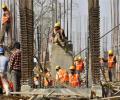
India's economy has bounced back amazingly from the Covid-19 pandemic and nationwide lockdown over the last one year, but it is not out of the woods yet, according to the World Bank, which in its latest report has predicted that the country's real GDP growth for fiscal year 21/22 could range from 7.5 to 12.5 per cent.
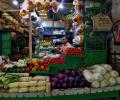
After unseasonal rains, supply disruptions and pandemic-induced woes pushed retail inflation well over the Reserve Bank's comfort zone in 2020, the scenario is likely to stay that way at least in the short term as economic recovery slowly gains foothold. For most part of this year, pricier food items pushed the retail inflation, based on Consumer Price Index (CPI), higher in the range of 6.58-7.61 per cent, except for March when the reading was 5.91 per cent. Experts believe retail inflation is likely to average around 6.3 per cent this fiscal and mostly will remain sticky going forward owing to pick-up in demand across sectors.

Welcoming the latest round of stimulus announced by Finance Minister Nirmala Sitharaman on Thursday, experts said the measures will support the economic recovery boosting demand, job creation and by providing funds to the MSME and stressed sectors. The fiscal impact of the stimulus is likely to be around 0.25-0.6 per cent of GDP in the current fiscal, they said.
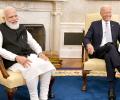
In a US-India Joint Leaders' Statement issued after the first in-person bilateral meeting between US President Joe Biden and Prime Minister Narendra Modi at the White House on Friday, the two leaders underscored the importance of combating terrorism in Afghanistan.
